Clay and Deed
Your AI strategy is clay. So is your tooling, your platform, your model access. Iqbal would tell you none of it is heaven or hell yet — and that the deed is the only thing that decides which.
By Rahul Jindal · 5 min read · May 18, 2026
“By our deeds we make life a heaven or a hell. This creature of dust is, by nature, neither angel of light nor demon of fire.”
Muhammad Iqbal · Bang-e-Dara, 1924
Read this couplet on Iqbal for All →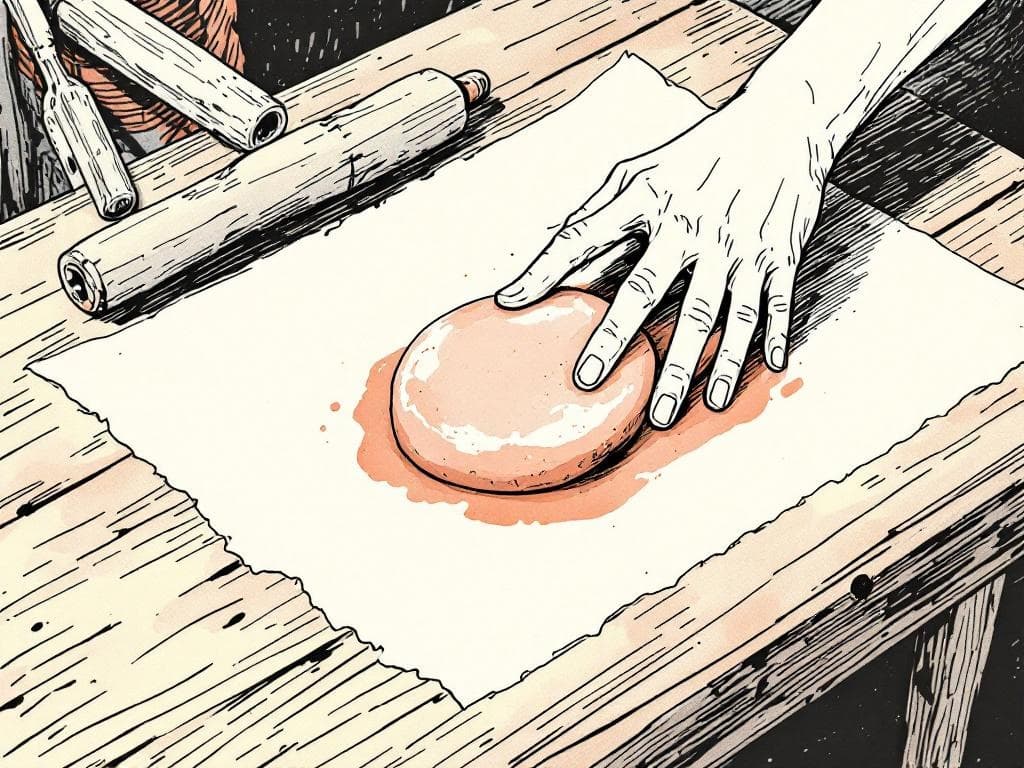
Walk an enterprise's AI program and you will be shown its assets: the platform contracts, the model access, the centre of excellence, the roadmap. Each is presented as progress. Each is, in Iqbal's exact sense, clay.
His line is deceptively plain. By deeds, he says, life becomes a heaven or a hell. The creature of dust — khaki — is by its nature neither: not an angel of light, not a demon of fire. The raw material is neutral. It has no temperature until it is acted upon. Everything you have bought for your transformation is khaki. It is not yet anything.
The deck has no temperature
This is the most useful and least welcome idea in change management, because it disqualifies most of what gets reported as progress. A strategy is not a deed. A budget approval is not a deed. A platform license, a reorg chart, a beautifully argued board paper — none of these is heaven or hell. They are clay sitting on a table.
Iqbal spent his life against a culture he believed had mistaken contemplation for action — that had grown eloquent about the spirit while the body stayed still. He would recognize the modern enterprise instantly. We have become extraordinarily sophisticated at the artifacts that precede the deed, and we mistake their quality for the quality of the change. A flawless strategy is a flawless lump of clay.
“A flawless strategy is a flawless lump of clay.”
Pilot purgatory is a deed problem
This is why pilots stall. A pilot is the last safe place to stand before a deed — real enough to feel like action, contained enough to require none of action's consequences. An organization can run pilots for years and remain, in Iqbal's terms, khaki: untransformed, because nothing was yet made heaven or hell.
The diagnostic is brutal and simple. For any initiative, ask: what deed has occurred — what is someone now doing differently, at scale, that they were not doing before? If the honest answer is a deck, a platform, or a plan, the initiative has no temperature. It is not failing. It has not yet begun.
Measure the deed
The practical correction is to move your instrumentation from clay to deed. Stop counting licenses, pilots, and trained headcount — those measure how much clay you have gathered. Count changed behaviour at scale: the workflow that now runs differently for everyone, the decision that is now made another way, the role that has actually changed shape.
Iqbal's khaki is not an insult. It is a description of potential — neither noori nor naari, capable of becoming either. That is genuinely hopeful. But it places the whole weight of the transformation on the one thing most programs defer longest: the deed. Heaven and hell are both downstream of it. Nothing is downstream of the deck.
Strategy, budget, and tooling are raw material — neither success nor failure, just clay. Only the acted-on change has a temperature. Measure deeds, not decks.