Multiframework Breakthroughs
Where the frameworks compose
By Rahul Jindal · 10 min read
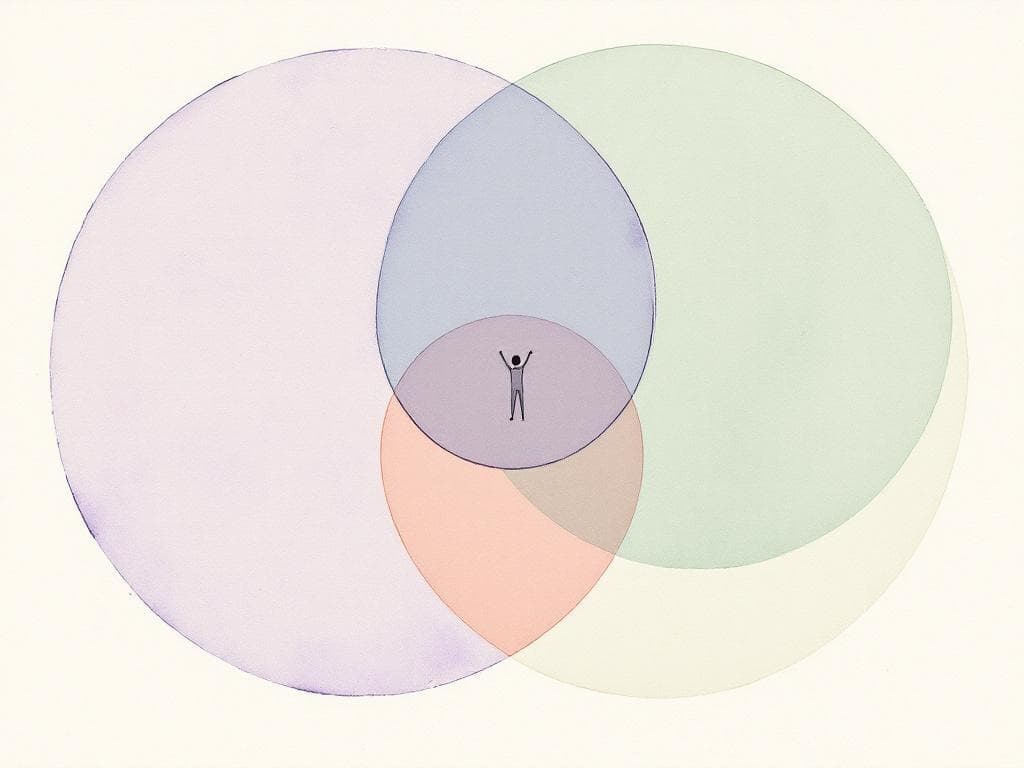
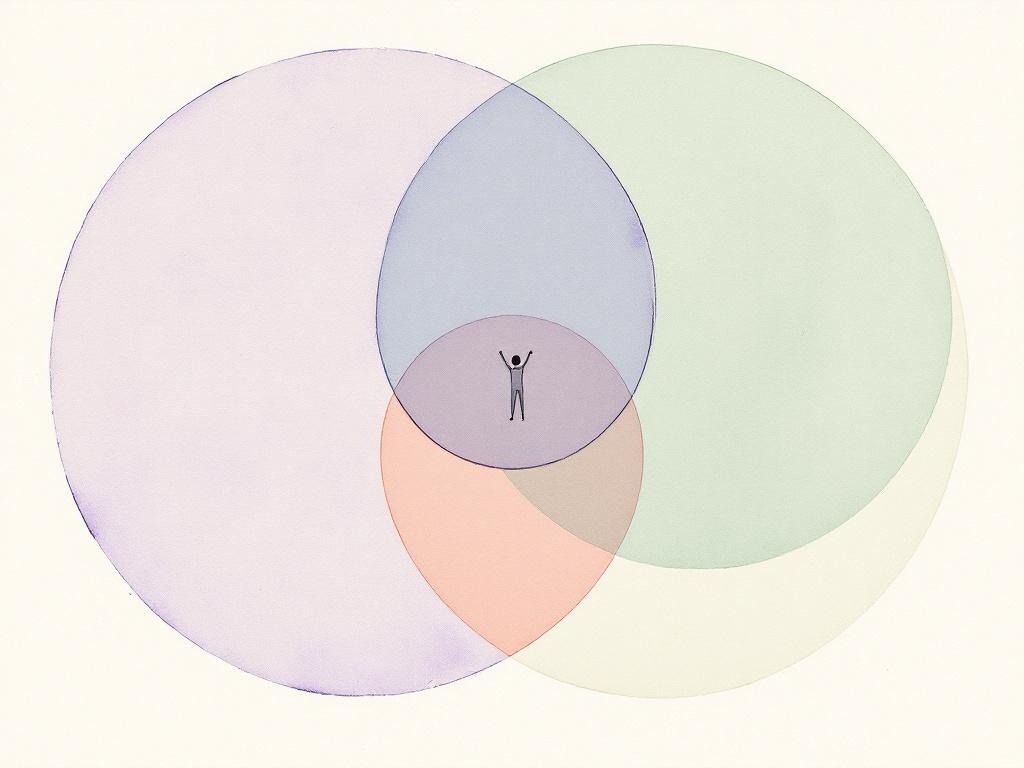
Each framework I am developing, the Decay Tax, the Seven Conversations, the Operator's Eye, Life After AI, OMI, RADAR, EMI , is sharper at its edges than at its center. Where one framework ends, another picks up; the seam is where the most original work lives.
This page is the working notebook for that seam. Each entry is an intersection: the place where two frameworks meet, compose, and produce something neither one could say alone. Some are bridge essays waiting to be written. Some are product hooks (a new module, a new metric, a new diagnostic). Some are the integrated thesis the eventual book opens with.
“A framework alone is a lens. Two frameworks meeting are a stereoscope; they produce depth a single lens cannot.”
The Eighth Conversation: Reliability
Of the seven C-suite conversations that make or break enterprise AI, none of them currently owns AI half-life. The Decay Tax is paid because the conversation about it has no host.
The CLO owns risk. The CFO owns numbers. The CTO owns architecture. The CHRO owns talent. The COO owns operations. The CMO owns the customer. The CEO owns synthesis. None of them owns whether the AI we shipped six months ago is still doing what we said it would.
That orphan question is the eighth conversation. Today it falls into the cracks between CTO ("the platform is up") and COO ("the process runs") and CFO ("the invoice is paid"). Nobody is named for it. Nobody pages on it. Nobody is graded on it.
The breakthrough is naming the role. Probably a Chief Reliability Officer for AI: half-SRE, half-product. Or a charter inside the COO's office. Either way, the move is structural: until the eighth conversation has a host, the Decay Tax compounds quietly inside the seven conversations that already do.
Essay candidate; would land cleanly as the bridge piece between Decay Tax and Seven Conversations
The Decay Maturity Overlay on OMI
OMI scores how fast an organization absorbs AI. It does not yet score how well that organization defends what it absorbed. The Decay Tax maturity model fits as a second axis on the OMI report.
OMI today: one number, four archetypes (Cosmetic, Assisted, Transitional, Adaptive), six dimensions of metabolism. Brilliant for absorption speed. Silent on whether what was absorbed is still working.
The four-stage Decay model (Blind, Aware, Instrumented, Self-Healing) slots in as a complementary diagnostic. An Adaptive organization that is also Blind on decay is a faster failure than a Cosmetic one that is at least Aware.
Product breakthrough: a 5-question Decay Maturity overlay added to the OMI assessment. Same flow, two scores, one report. Gives every taker a personalized half-life-readiness diagnostic without asking them to take a second assessment.
Product hook; concrete next move for the OMI assessment, ships in a week of work
How the Four Archetypes Host the Seven Conversations
The Operating Maturity Grid (Machine, Philosophers, Doers, Busy Room) and the Seven Conversations are usually treated separately. Cross them and you get the most diagnostic 4×7 matrix in enterprise AI.
Machines translate between all seven conversations. They have a Risk conversation that talks to the Architecture conversation that talks to the Numbers conversation. The translator role exists, often informally.
Philosophers have all seven conversations brilliantly. Then none of them produce a decision the org can feel. The conversations live in offsites and decks; the operating system swallows them unchanged.
Doers run two of the seven conversations on a heroic cadence (usually Architecture and Operations) and quietly under-host the other five. The cathedral gets built; it just faces the wrong direction.
Busy Rooms have all seven conversations happening simultaneously and reaching no one. Every function is talking; nobody is listening across the seam. This is where the Decay Tax accumulates fastest.
The breakthrough is the matrix itself. Most leadership teams diagnose the wrong axis. They assume they are in the wrong quadrant when actually they are in the right quadrant but missing two of the seven conversations. The matrix lets them see both at once.
Originality; this 4×7 matrix has not been published; it is the bridge essay between the two frameworks
Rails Has a First Playbook Now
RADAR's Rails axis (governance, operations, reliability) has been the most under-developed of the five. The Decay Tax is the first deep playbook that sits cleanly inside Rails.
RADAR (Reimagination, Agentification, Data, Absorption, Rails) is the macro framework. Rails is the axis that asks: once you have the AI deployed, what keeps it honest, governed, and reliable over time? It has been an axis without a playbook.
The Decay Tax is that playbook. The eight currencies of decay, the half-life metric, the four-stage maturity model, the eighth conversation: these are the operating system of Rails.
Breakthrough: position the Decay Tax as Rails' canonical reference. Future deep dives on the other four axes (an Agentification playbook for sequencing agents, a Data playbook for foundations, an Absorption playbook for change, a Reimagination playbook for redesign) follow the same pattern. Each axis earns a book.
Structural; gives RADAR a deep-dive cadence and the Decay Tax a ready-made parent frame
Each Function Metabolizes a Different Emotion
The Seven Conversations are usually treated as cognitive: what does each function think about AI. Run them through the Emotional Metabolism lens and a different map appears: what does each function feel about AI, and what does the org need to digest function by function.
Legal metabolizes risk. Finance metabolizes uncertainty. HR metabolizes loss: of roles, of identity, of the social contract that hiring used to be. IT metabolizes obsolescence. Operations metabolizes upheaval. Marketing metabolizes the customer's distrust. The CEO metabolizes the political weight of being the visible owner.
Each conversation looks rational on the surface. Each one runs on a specific emotional substrate underneath. The reason transformations stall is rarely the cognitive layer; it is the emotional one. The CFO who keeps asking for one more spreadsheet is digesting uncertainty, not interrogating the math.
Breakthrough: the EMI five (Identity, Closure, Trust, Belonging, Agency) maps onto the seven conversations function by function. Legal needs Closure. HR needs Identity. Finance needs Trust. IT needs Agency. Operations needs Belonging. The function-by-function emotional map is the bridge essay between these two frameworks, and the first thing that turns Fiona's interest in EMI into something operationally useful for an enterprise AI program.
Highest-leverage bridge; connects EMI to enterprise transformation, gives Fiona's endorsement somewhere concrete to land
Inside-Out and Outside-In Are the Same Picture
Inside the org, AI absorption is the seven conversations. Outside the org, AI absorption is the fifteen dimensions of human life. Same person, different rooms, and the org is failing to see the worker as both.
The Seven Conversations names what the C-suite has to do. Life After AI names what is happening to the human being who shows up at 9 AM on Monday. The technical writer being promoted to oversee AI-generated content is in the HR conversation at the org level and in the Identity Crisis essay at the human level, at the same moment, in the same person, in the same week.
The breakthrough is recognizing they are the same event, viewed from two zoom levels. An enterprise AI program that handles the seven conversations brilliantly and ignores the fifteen dimensions of life will still produce quiet attrition, sabotage, and the resentful team that the contract review story warned about.
This is the integrated thesis: enterprise transformation done well requires both lenses. The HR conversation alone produces reskilling programs. The Identity Crisis alone produces philosophical essays. Together they produce a transition that the human inside the org can actually live through.
The integrated thesis; eventual book intro material; bridges Rahul's organizational and societal arcs
How this notebook works
The frameworks were not built to compose. They came from different problems at different moments: RADAR from a transformation engagement, EMI from a coaching conversation, the Decay Tax from a pattern across enterprise failures, the Seven Conversations from a decade of watching CIOs ask the wrong people the right questions.
That they compose at all is a bet that the underlying phenomenon is one phenomenon: a slow, many-handed process by which a real organization absorbs a capability that does not respect its org chart. Each framework is a slice of that. The intersections are where the slices interlock.
I will keep adding to this page as new intersections surface. Some will become essays. Some will become product features in OMI or EMI. Some will become chapters of the eventual book. All of them earn their place here when they pass a single test: does this say something neither framework could say alone?
Email this as a LinkedIn pack
Get a feed-ready LinkedIn post (under the 3,000-character cap), a long-form LinkedIn article version, the hero image, and an editable document version of the full essay, delivered to your inbox. Ready to post.
If one of these intersections is the next thing worth writing long-form, the candidate I would lead with is Each Function Metabolizes a Different Emotion : it gives EMI its first concretely operational application and gives the Seven Conversations its emotional substrate.