Life After AI
How humans reorganize when the machines get smart
By Rahul Jindal · 12 min read
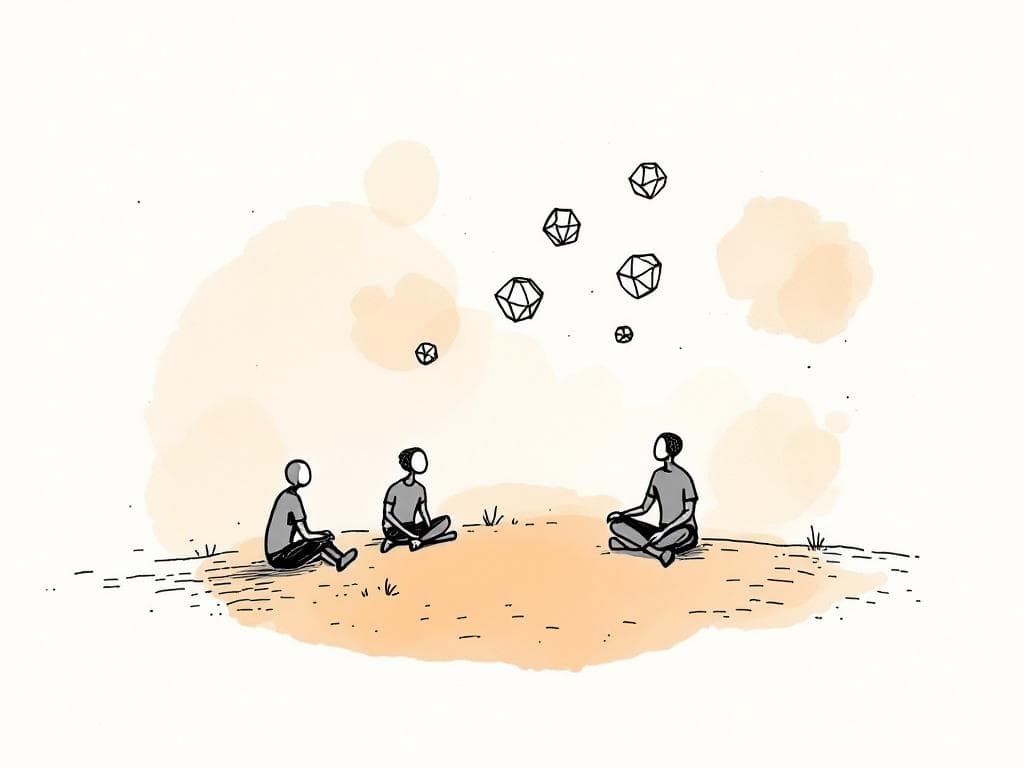
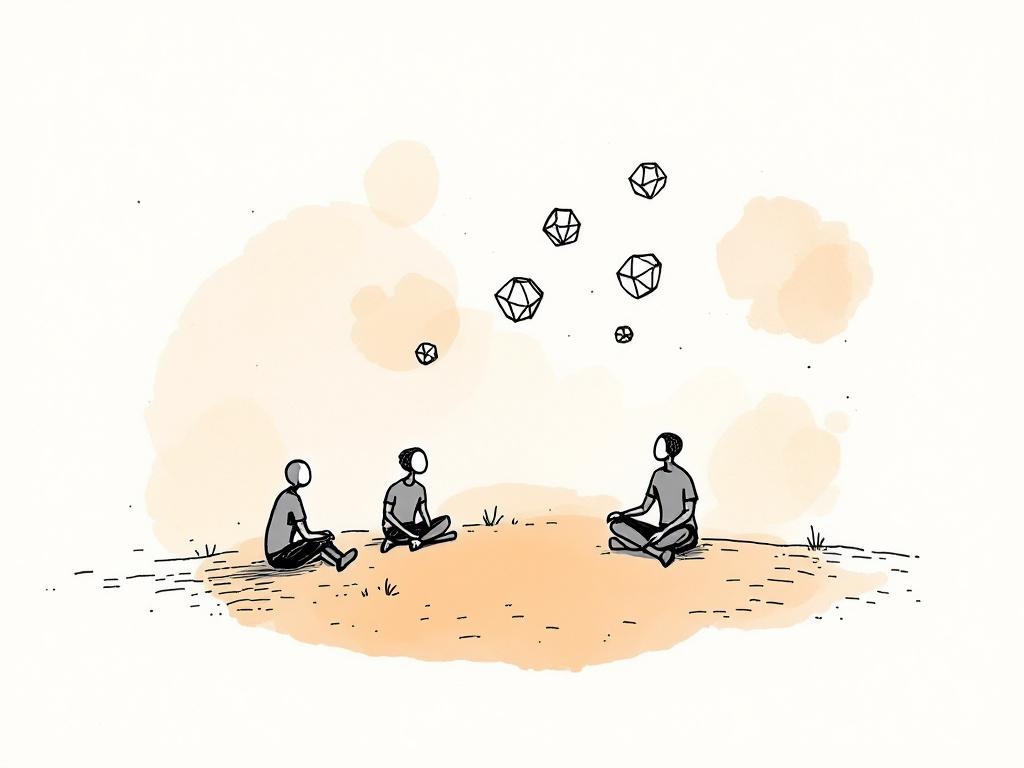
AI rearranges when we do things, who we do them with, why we bother, and eventually who we become. It changes the shape of life, not just the to-do list.
This is not a book about technology. It is a book about adaptation, the human kind. Fifteen dimensions of life that reshape when machines absorb the work that used to define us: work itself, daily schedules, identity, companionship, children, education, health, commerce, governance, income, nations, family, love, creativity, meaning. The thesis is quiet: AI did not create the splits we are now seeing in how humans respond to it. It revealed splits that were already there.
“The technology is identical. The human response is biographical.”
The structure: four acts, twenty-seven essays
The book sits across four acts. Each is a level of zoom, from the individual to the team to the society to the existential.
Act 1: The Individual. Does work increase or decrease? What does a 2030 schedule look like? Who are you when the task that defined you is now automated? The Loneliness Paradox. What we teach our children when ambiguity is the curriculum.
Act 2: The Team and the Organization. The five-person company that does what five hundred used to do. Middle management's last stand. The new org chart, where orchestrating agents replaces managing people. Hiring when skills are commodity. The end of meetings.
Act 3: Society and Relationships. The income question (UBI or something else). Shopping when AI knows you. Governance at the speed of AI. Nations in the AI age. Family. Friendship in the age of perfect listeners. Love, engineered. Creativity when everyone can create.
Act 4: The Big Questions. The meaning crisis. A Buddhist lens on AI. Two futures: the gentle singularity and the adolescent catastrophe. India's moment. A letter to my son.
Twenty-seven essays drafted, ten chapters of the manuscript written, hundreds of pages of background research underneath. What follows are three of those essays, chosen because they compress the thesis without needing the rest.
The Identity Crisis
Life After AI · Essay 4
"I am a writer." "I am an analyst." "I am a coder." Now AI writes, analyzes, and codes. So, who are you?
This is not a career question. It is an existential one. Viktor Frankl asked it in the concentration camps: when everything external is stripped away, what remains? We are about to ask it at civilizational scale.
I have watched this up close. A technical writer with twenty years of experience told me, "I do not know what I am anymore." She was not laid off. She was promoted, to oversee AI-generated content. But the thing that made her her, the craft of constructing a perfect sentence, was now handled by a machine. She was more productive and less herself.
This is what I call the Task-Identity Trap. We fuse who we are with what we do. "I am a coder" is cleaner than "I am a person who values elegant problem-solving, clarity of thought, and the patience to debug reality." But only the second version survives the AI transition.
Buddhist philosophy has something sharp to say here. Attachment to identity, to any fixed idea of who we are, is itself a source of suffering. The self is not a noun. It is a verb. Always becoming, never arrived.
The people who will thrive are not those who cling to their job title. They are the ones who define themselves by values and impact, not by tasks and tools. "I help people see what they could not see before" survives any technology shift. "I am a data analyst" does not.
The Loneliness Paradox
Life After AI · Essay 5
My AI assistant remembers every conversation I have had with it. It never interrupts. It never judges. It is endlessly patient, available at 3 AM, and gets better at understanding me with each interaction.
My best friend forgets things I have told him twice, talks over me regularly, and once gave me terrible advice about a job change.
I spend more time with the AI. But the friend is the one I call when the world falls apart.
This is the Loneliness Paradox of the AI age. Our most patient, available, knowledgeable companions are not human. And yet loneliness is projected to become a bigger public health crisis than obesity. How is that possible? Because companionship without vulnerability is not connection. It is consumption.
When my friend gives me bad advice, I have to navigate the awkwardness of disagreeing. That friction (the negotiation, the misunderstanding, the repair) is what builds the bond. The AI interaction is frictionless. And that is precisely its limitation.
We optimized for convenience. We got efficiency. We lost the thing that actually makes us feel less alone: the experience of being seen by someone who could choose not to look. An AI cannot choose. It always responds. That absence of choice is the absence of love.
The Five-Person Company That Does What 500 Did
Life After AI · Essay 3
In 2015, it took roughly 500 people to run a mid-sized insurance operation. Underwriting, claims, customer service, compliance, analytics, IT, HR, finance.
By 2030, I believe a founder and four exceptional people could do the same, with 50 AI agents handling the rest. Not a hypothetical. The architecture is already visible.
One person sets strategy and manages the agent orchestra. One handles the irreducibly human client relationships: the calls where someone is scared, grieving, or confused. One owns regulatory judgment: the edge cases where the law is ambiguous and the stakes are real. One builds and maintains the AI systems themselves. And one person I would call the "quality conscience" (the human who asks should we be doing this? when the system says we can).
Five humans. Fifty agents. Same output. But here is what nobody wants to talk about: what happens to the other 495?
The optimist says they redeploy: to care work, creative work, entrepreneurship, the thousand tasks that need a human touch. The realist says: the transition is brutal. Skills do not transfer overnight. Identities do not shift on command. A forty-five-year-old claims processor does not become a "human experience designer" by Friday.
The new leadership skill is not managing people. It is orchestrating agents : defining their boundaries, catching their errors, knowing when to override, and maintaining the judgment layer that keeps the whole system honest. Managing 50 AI agents is not easier than managing 50 humans. It is differently hard. And we have zero training programs for it.
Where this is going
Life After AI is the outside-in view: how human lives reshape when AI absorbs the work that used to define them. The Seven Conversations is the inside-out view: how organizations reshape when the same shift hits their function-level seams. They are two halves of the same picture. The book sits at the intersection. The series is being written there too.
Twenty-seven essays drafted. Ten chapters in manuscript form. The remaining seventeen chapters are scaffolded but unwritten. The plan: ship the LinkedIn series in sequence, let it find an audience, and let that audience pull the book out of the manuscript.
Email this as a LinkedIn pack
Get a feed-ready LinkedIn post (under the 3,000-character cap), a long-form LinkedIn article version, the hero image, and an editable document version of the full essay, delivered to your inbox. Ready to post.
The book is the long arc; the LinkedIn series is the public draft. If you want the organizational mirror to this work, read The Seven Conversations. If you want to see how these frameworks compose with each other, the multiframework breakthroughs page is where I am tracking the connections.