The Margin Thesis: Something Has to Give
By Rahul Jindal · 10 min read
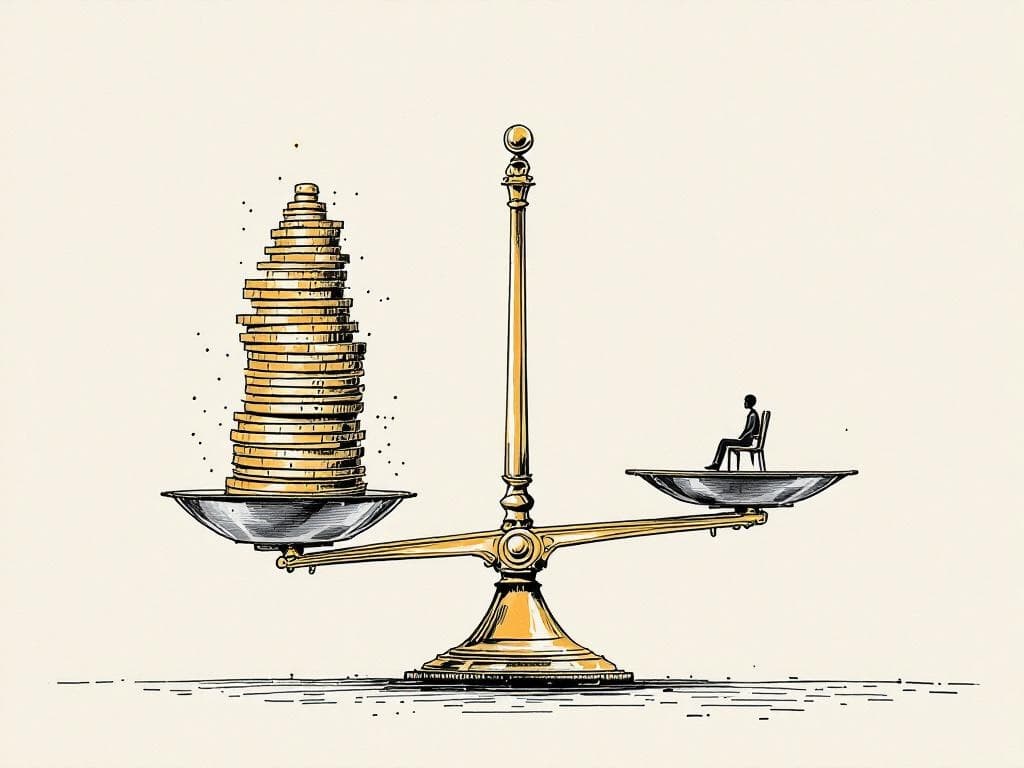
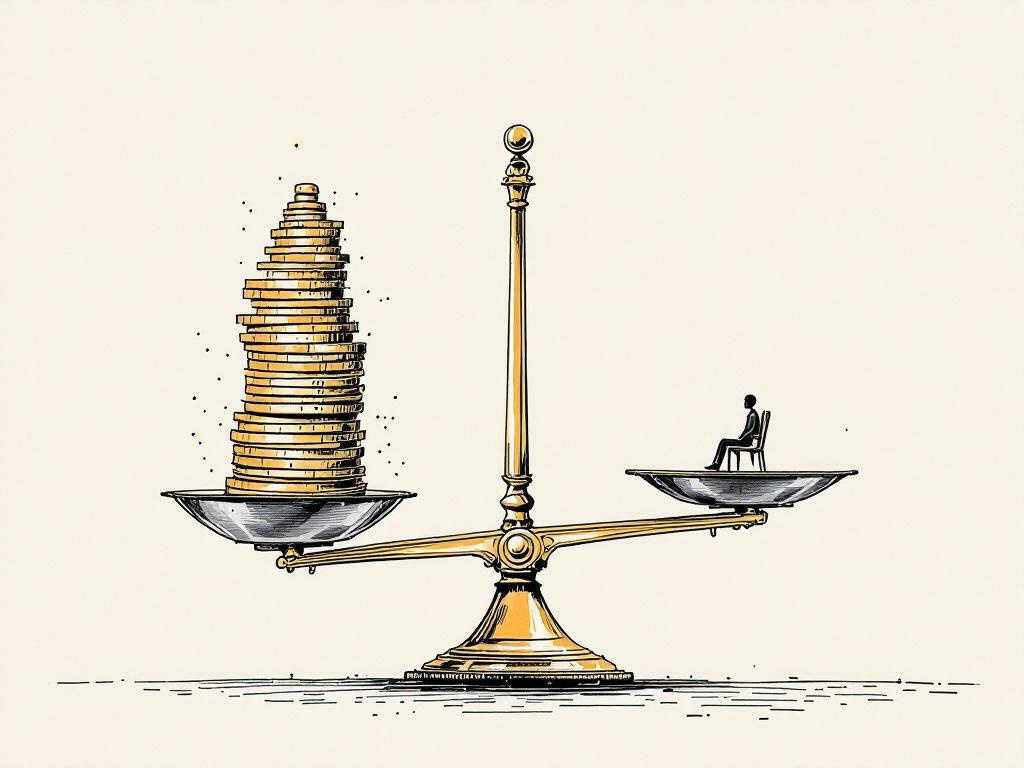
Every CFO with an AI budget is living the same paradox in 2026. The AI bill is climbing every quarter. Payroll has not moved. They are paying for the new thing while still paying for the old thing, and most of their AI pilots have yet to show a measurable return. An MIT study in 2025 put that figure near 95 percent. So the question writes itself: something has to give, or the margin collapses. What gives, and when, is the whole game.
My earlier version of this argument said the trillions going into AI infrastructure need a return, and the return has to come out of white-collar labor. That is still true. But it skipped a step, and the step is where most of the confusion sits. The AI cost does not start on your income statement. It travels there. Watching the hyperscalers report record revenue and record backlog, you might conclude that enterprises are already paying enormous AI bills. They are not, yet. The bill is upstream, and it is moving toward you in a fixed order.
The Order of Giving
Roughly four trillion dollars of AI infrastructure is committed through 2030. Hyperscaler capital spending alone runs past 600 billion dollars in 2026. That capital carries a depreciation clock, which means it has to be recovered from somebody. The recovery does not happen everywhere at once. It happens in sequence, and naming the sequence is the point of this thesis.
First, investor capital absorbs it. The model labs run their inference at a loss today. Those losses are funded by equity, not by customers. This is the layer the bubble critics are watching, and they are right that it is fragile.
Second, the hyperscalers absorb it. The capital they have deployed into data centers and chips turns into depreciation expense, and that expense lands on their own margins long before it lands on yours. Their free cash flow is already under visible pressure. This is why several of them have stretched the accounting life of AI hardware: it softens the near-term hit.
Third, the enterprise absorbs it, through software prices. This is the layer almost nobody talks about, and it is the one that reaches you. The cost arrives not as a metered cloud bill you can switch off, but as a price increase on software you already depend on. Microsoft is raising the price of its core productivity suite and folding AI into higher-priced tiers. Vendors across the category are adding per-action and per-conversation fees on top of the seats you already pay for. You did not choose to run up an AI bill. The bill arrived anyway, baked into renewal quotes you cannot easily refuse.
Fourth, labor absorbs the rest.Once the software cost is unavoidable and the promised productivity has not yet shown up in the P&L, the CFO looks for the largest addressable cost left. After real estate (already trimmed by hybrid work) and technology (the investment itself), that cost is people. By spring 2026, the outplacement firm Challenger, Gray & Christmas reported AI as the single most-cited reason for announced job cuts. The order of giving had reached its last link.
“The backlog you read as a boom is a bill. Committed capital with a depreciation clock has to be recovered, and the recovery route runs through your software contracts and then through your payroll.”
The Backlog Is a Bill, Not a Boom
The record backlog at the cloud providers is real, but a large share of it is the AI industry buying from itself. Chipmakers invest in model labs. The labs commit that money to cloud providers. The cloud providers buy chips. Money leaves one balance sheet as an investment and returns to another as revenue. You can read this two ways. The bearish read is that the demand is hollow, which raises the odds of a sharp correction. The read almost no one is writing is the more useful one for an operator: the capital got committed regardless of end demand, and committed capital has to be recovered. The backlog is therefore a forward claim on future enterprise margins. It is a bill addressed to you, postmarked for the next few years.
A reasonable objection is that the price of AI keeps falling, so the cost line should shrink on its own. The price per unit has indeed collapsed. The total bill has risen anyway, because usage has grown faster than the price has fallen. Agentic workflows make many model calls per task. Always-on systems consume capacity around the clock. Cheaper units invite far more units. The cost line grows even as each unit gets cheaper, which is the opposite of the relief the falling price seems to promise.
Restructurers and the Restructured
The thesis splits companies into two kinds, and the split decides who keeps the margin and who loses it.
Restructurers redesign their workforce around AI on their own terms. They redeploy people to higher-value work, retire roles that AI does better, and create roles that only humans can hold. They are honest with their people about what is changing, and they invest in the transition. They take the margin hit deliberately, while they still have the room to choose how.
The restructured wait, because restructuring is politically hard. They layer AI on top of existing roles, which adds cost without removing any. The reckoning still comes. A competitor running at half the headcount delivers the same output for less, and the market forces the change that leadership would not. The restructuring happens regardless. It simply happens later, more painfully, and without the strategic choices that early movers got to make.
“If your AI roadmap has only a savings column, you are not transforming. You are shrinking on a delay.”
Why You Cannot Grow Out of It
The most hopeful escape is to grow out of the squeeze. A company with real pricing power can pass its AI cost to its own customers, or use AI to expand revenue faster than cost. At the level of a single firm, this works, and it is a genuine survival route. It belongs to the strongest businesses, and it is worth fighting to earn.
At the level of the economy, though, it is not an escape. When you pass the cost to your customer, the cost has not disappeared. It has moved to the next income statement down the chain, which now faces its own version of the same squeeze. Pricing power decides who gives last, not whether anyone gives. That is what makes this thesis hard to wriggle out of. There is no aggregate exit, only a queue, and the question for any company is its place in line.
What Would Prove This Wrong
A thesis that cannot be wrong is not worth much, so here is what would refute this one. The order of giving makes dated, checkable predictions. If the model labs reach durable profitability without new capital, the first link breaks. If the hyperscalers hold or grow their cash flow while sustaining this level of capital spending, the second link breaks. If enterprise software cost stays flat as a share of operating expense while AI adoption climbs, the transmission link breaks. The load-bearing test sits at the level of the whole economy: if labor's share of national income rises while all this AI capital is being recovered, then the gains are flowing to workers rather than to capital, and the thesis is simply wrong. I do not expect that. But I am naming the condition, because that is the difference between a forecast and a slogan.
What This Means for HR Leaders
If you lead people strategy, this is your problem. Not because HR is uniquely exposed, but because HR owns the workforce response. You are the person who has to answer how the company restructures on its own terms rather than the market's. The work is to know, before the renewal quotes and the earnings pressure arrive, where the squeeze will land in your organization and how fast you can move people when it does.
The OMI Talent Metabolism dimension measures exactly that capacity. Low Talent Metabolism puts you among the restructured, because you cannot move your people fast enough to choose. High Talent Metabolism lets you be a restructurer, because your workforce can absorb change at the speed the market demands.
The Five Dimensions of Workforce Vulnerability
The Margin Thesis diagnostic scores vulnerability across five dimensions:
- Task Vulnerability: What share of the work can AI do today?
- Role Exposure: Which job categories sit most at risk?
- Organizational Readiness: Can you actually restructure if you have to?
- Workforce Transition Capacity: Can you retrain and redeploy at speed?
- Economic Sustainability: Does the math work for your industry and your margins?
Email this as a LinkedIn pack
Get a feed-ready LinkedIn post (under the 3,000-character cap), a long-form LinkedIn article version, the hero image, and an editable document version of the full essay, delivered to your inbox. Ready to post.
Related Insights
Measure your absorption speed first
The OMI tells you how fast your organization can metabolize change. The Margin Thesis tells you how fast it needs to.
Take the OMI Assessment