The Compounding Equation Has Three Variables. You Control Two.
Return is the one everyone chases and the one you steer least. The outcome is decided more by the two levers nobody brags about.
By Rahul Jindal · 9 min read · Published June 7, 2026
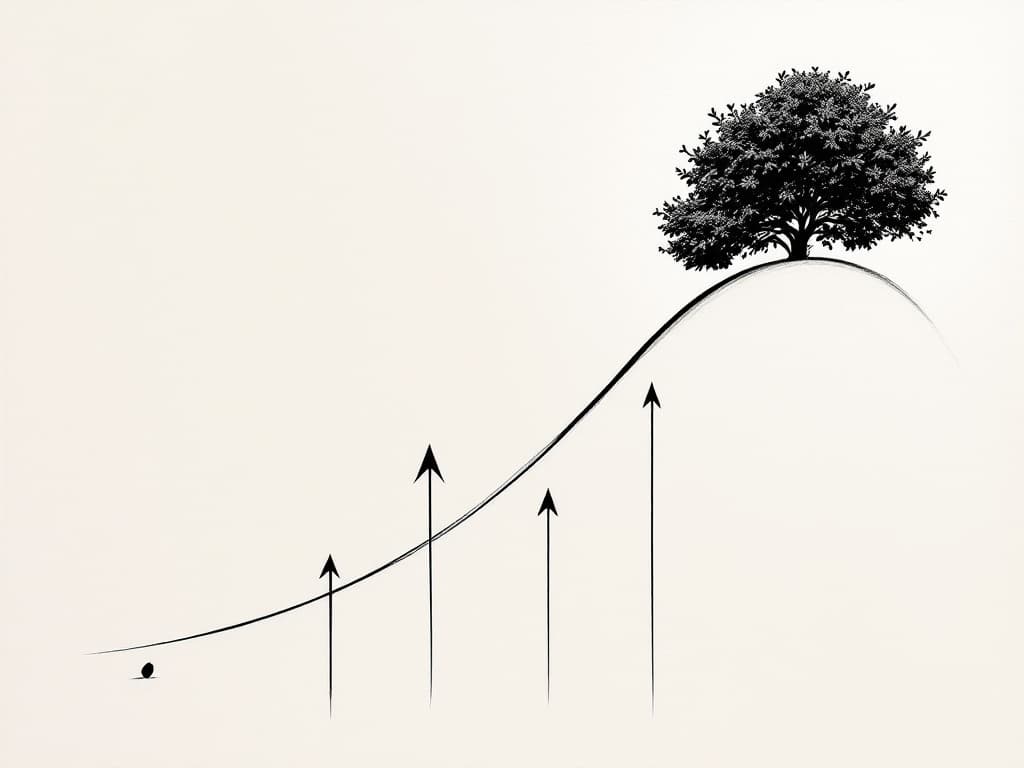
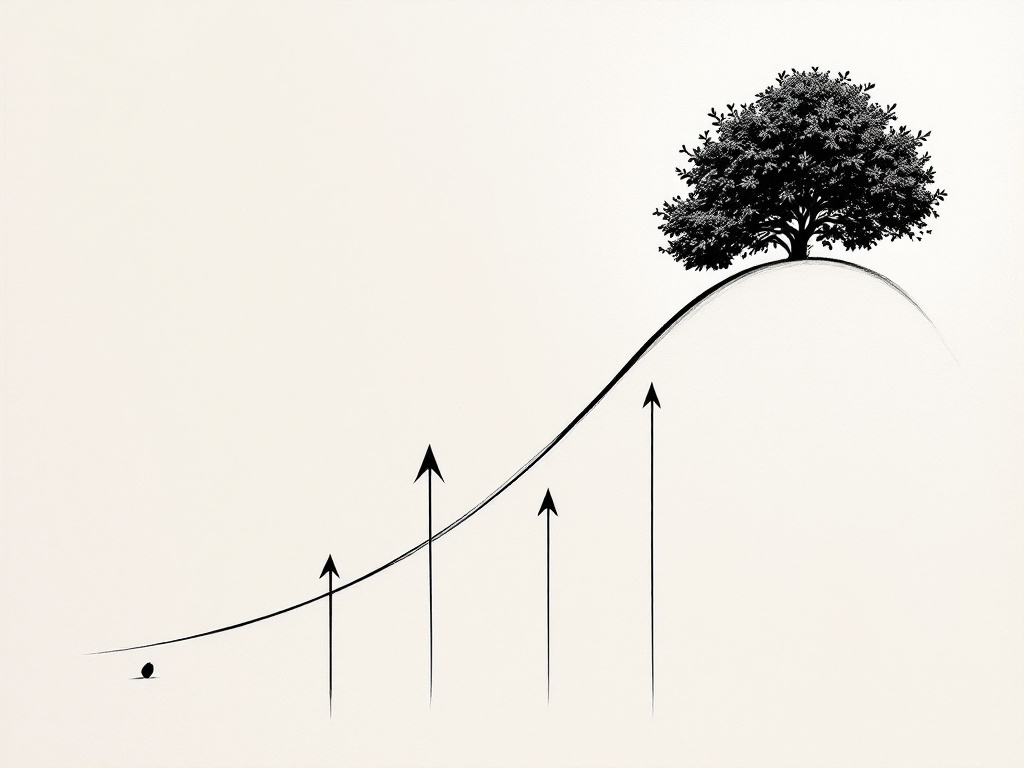
Ask anyone how they plan to build wealth and they will talk about returns. The fund that beat the index. The stock that ran. The manager with the track record. Return is the number that gets quoted at dinner, and it is the number on which almost every investor spends almost all of their attention.
It is also the one input over which they have the least control.
A portfolio grows on three engines, not one. The rate of return you earn. The length of time the money stays invested. And the fresh capital you keep feeding in. Final wealth is what those three produce together. The interesting question is not which one matters. All three matter. The question is which one moves the outcome most for each rupee of effort, and which ones you can actually direct. Those turn out to be different questions with uncomfortable answers.
The equation everyone half-remembers
Strip the spreadsheet away and the machine is simple. Your existing money compounds at a rate. Each year you add more, and that addition compounds for however many years remain. Written plainly:
Final wealth = (what you have today, grown at your return for the whole horizon) + (everything you add along the way, each piece grown for the years it had).
Two structural facts hide inside that sentence, and they govern everything that follows. Return sits in the base of the compounding. Time sits in the exponent. An exponent eventually overwhelms a base, which is why time is so powerful late and so quiet early. Contributions are the third term, and they are the only one you can change by an act of will on a Tuesday afternoon.
Three investors, one finish line
Take three people. Each starts with the same ₹20 lakh and runs the same 25-year horizon. They differ in which engine they lean on. These are illustrative figures, not anyone's real portfolio, chosen for round arithmetic.
| Investor | Their bet | Return | Adds / yr | After 25 yrs |
|---|---|---|---|---|
| Anil | The stock-picker | 14% | Nothing | ₹5.3 Cr |
| Bina | The saver | 10% | ₹3 lakh | ₹5.1 Cr |
| Chetan | Both engines | 12% | ₹3 lakh | ₹7.4 Cr |
Look at Anil and Bina. They finish in almost the same place. Anil got there by beating the market by four full points every year for twenty-five years, an edge that almost no professional sustains. Bina got there by earning the plain market return and instructing her bank to move ₹3 lakh into the portfolio every year. One of those is a feat of skill, luck, and nerve repeated across a quarter-century. The other is a standing instruction she set up once and forgot.
Chetan is the quiet lesson. He did not have to choose. A market-ish return and a steady contribution did not add, they multiplied, and he finished nearly half again ahead of either specialist. The engines are not rivals. The mistake is treating them as if you must pick one.
“Anil beat the market by four points a year for twenty-five years to match Bina. Bina set up an auto-transfer. Both finished in the same place.”
What a return edge is actually worth
None of this says return does not matter. It says you should size it honestly. Hold contributions aside and look at what two extra points of annual return do to a lone ₹20 lakh, at different horizons.
| Horizon | At 10% | At 12% | What the 2 points bought |
|---|---|---|---|
| 10 years | ₹51.9 L | ₹62.1 L | +20% |
| 25 years | ₹2.17 Cr | ₹3.40 Cr | +57% |
Two points is worth a fifth more money over a decade and well over half again across a working lifetime. That is real. It is also back-loaded, which is the part people miss. A return edge pays its biggest dividend at the far end of the horizon, after decades of compounding have had time to magnify the gap. The investor who switches funds chasing two points expects the reward now. The math hands most of it to them in year twenty.
The strange honesty of time
Time behaves differently from return, and more reliably. Each extra year you stay invested multiplies the ending value by one plus your return. At a 10% return, every additional year you simply do not sell adds a flat 10% to the final number. Not 10% of this year's gain. 10% of the whole ending pile. It does not matter whether you are in year three or year twenty-three. The boost is constant and it is yours for doing nothing.
Stretch the same portfolio from a 20-year hold to a 25-year hold and the ending value climbs by about 61%, with no change in skill, no better fund, no cleverness at all. The only input was patience. This is the engine that the phrase “time in the market beats timing the market” is gesturing at, except the cliche undersells it. Time is not just better than timing. It is a return you book with certainty, paid out for the act of leaving things alone.
“A return edge pays its biggest dividend in year twenty. An extra year of patience pays a flat, certain bonus the moment you grant it.”
The lever nobody romanticizes
Contributions get no glory. There is no story in “I saved a bit more.” Yet of the three engines, fresh capital is the one you control most directly, and it does something the other two cannot. It lowers the return you need in the first place.
Suppose the goal is to turn ₹20 lakh into ₹2 crore, a clean tenfold, in 25 years. On the corpus alone, with nothing added, you would need to compound at roughly 9.7% a year, every year, for a quarter-century. Demanding, and entirely at the mercy of markets. Now add just ₹3 lakh a year. The return you need to hit the same ₹2 crore falls to about 4.7%.
A modest, controllable habit roughly halved the performance you had to extract from the market. That is the quiet trade at the heart of wealth-building. Every rupee you add is a rupee of return you do not have to earn, do not have to predict, and do not have to beat anyone to get. The saver is buying down the hardest input with the easiest one.
The duel, run twice
So which single lever should you pull when you can pull only one? Take Chetan's portfolio as the base, 12% with ₹3 lakh a year added, and nudge each engine by one notch. The answer depends entirely on the horizon, and that dependence is the whole point.
| One extra notch of... | Over 10 years | Over 25 years |
|---|---|---|
| +1 point of return | +7% | +20% |
| +₹1 lakh / yr saved | +15% | +18% |
| +1 more year invested | +15% | +12% |
Over ten years the two controllable levers, saving more and staying longer, each move the outcome about twice as much as a hard-won point of return. Over twenty-five years the return point pulls ahead, because it has the runway to compound. The lesson is not that one engine wins. It is that the engine you should push depends on how long you have. Near a goal, discipline dominates. Far from one, the return edge earns its keep. Most people get this exactly backwards, chasing return for short-horizon money and coasting on contributions for the long-horizon money that would reward a better portfolio.
Why return is the one you control least
Here is the part that should reorder your priorities. Of the three engines, return is not merely the hardest to raise. It is the only one you cannot reliably set at all.
Time is yours. You decide when to start and whether to sell. No one can take a year of patience away from you.
Contributions are yours. Your savings rate is a decision you make with your income, renewed every month. It answers to your spending, not to a market.
Return above the market is not yours to set. The portion of return that comes from the market itself, the beta, you can choose by deciding how much equity to hold. But the extra, the alpha, the part that beats the index, is by definition the piece you cannot summon on demand. If you could forecast it, it would not be an edge. It is a zero-sum contest: for every rupee of outperformance someone earns, another investor underperforms by the same rupee, and the average active rupee, before costs, simply earns the index. After fees it earns less. That is not cynicism. It is arithmetic that holds no matter how clever the average participant becomes.
The pursuit of alpha is real and worth doing. Some managers do compound an edge, and a sliver of investors will hold them. But you cannot plan on it, because the moment you write a number above the market into your plan, you have built a plan that flatters you. The honest base case uses the market return you can actually buy, treats any outperformance as a bonus if it shows up, and pours real effort into the two engines that answer to you.
“You can choose how much market you own. You cannot choose to beat it. Plan on the return you can buy, and treat the rest as a bonus.”
What this means if you are actually building wealth
The popular picture of the successful investor is a person with a gift for picking winners. The math tells a duller and more encouraging story. The biggest, most reliable engines of a final outcome are the savings rate you sustain and the years you let the thing run, and both are matters of temperament rather than talent.
Three conclusions fall out of the scenarios.
- Raise the savings rate before you chase the return. A point of extra saving is in your hands today and, at most useful horizons, moves the outcome as much as a point of return you may never capture. It is the lever with the best ratio of impact to control.
- Protect the time, do not interrupt it. The single most expensive thing an investor does is sell early and break the compounding. Every year held is a certain bonus. The discipline is not to be brilliant. It is to be still.
- Earn the market cheaply, and let any edge be a gift. Decide your equity exposure deliberately, keep costs low, and stop treating a hoped-for outperformance as the foundation of the plan. Build on the return you can buy. If alpha arrives, it compounds on top of a structure that did not depend on it.
The horizon decides the emphasis. Money you will need soon is ruled by what you save and whether you stay put, because return has no time to work. Money for the far future is where a better portfolio finally earns its difference, and where the patience to hold it is rewarded most. Match the lever to the clock.
Return is the engine you talk about. Time and contributions are the engines that decide where you land. The wealthy investor is not usually the best stock-picker in the room. More often it is the person who saved relentlessly, held without flinching, and let a perfectly ordinary return do its patient, exponential work.
Email this as a LinkedIn pack
Get a feed-ready LinkedIn post (under the 3,000-character cap), a long-form LinkedIn article version, the hero image, and an editable document version of the full essay, delivered to your inbox. Ready to post.