The Formula for Compounding Anything
The math that grows a portfolio is the math that grows a life. Most of us optimize the one input that matters least.
By Rahul Jindal · 3 min read · Published June 7, 2026
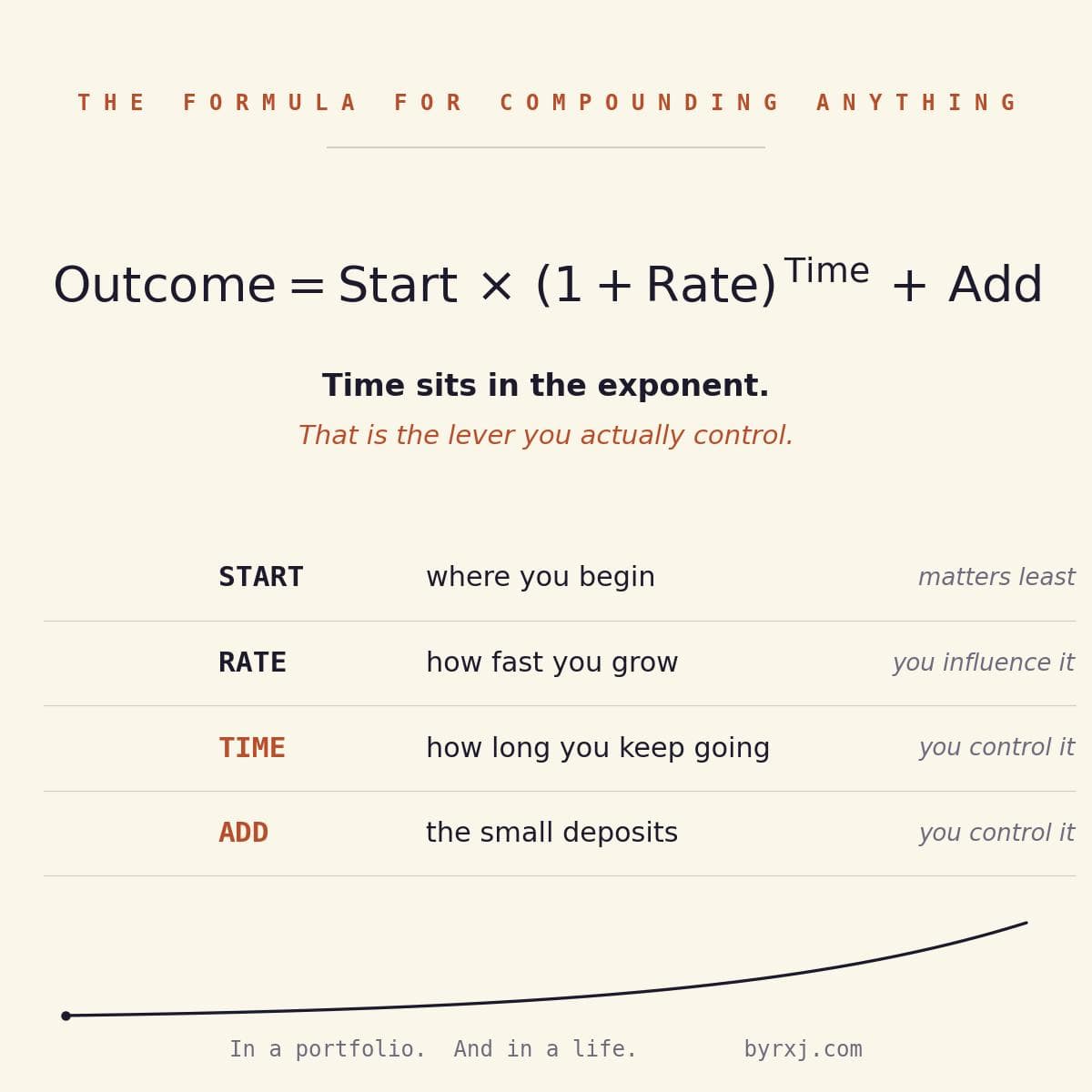
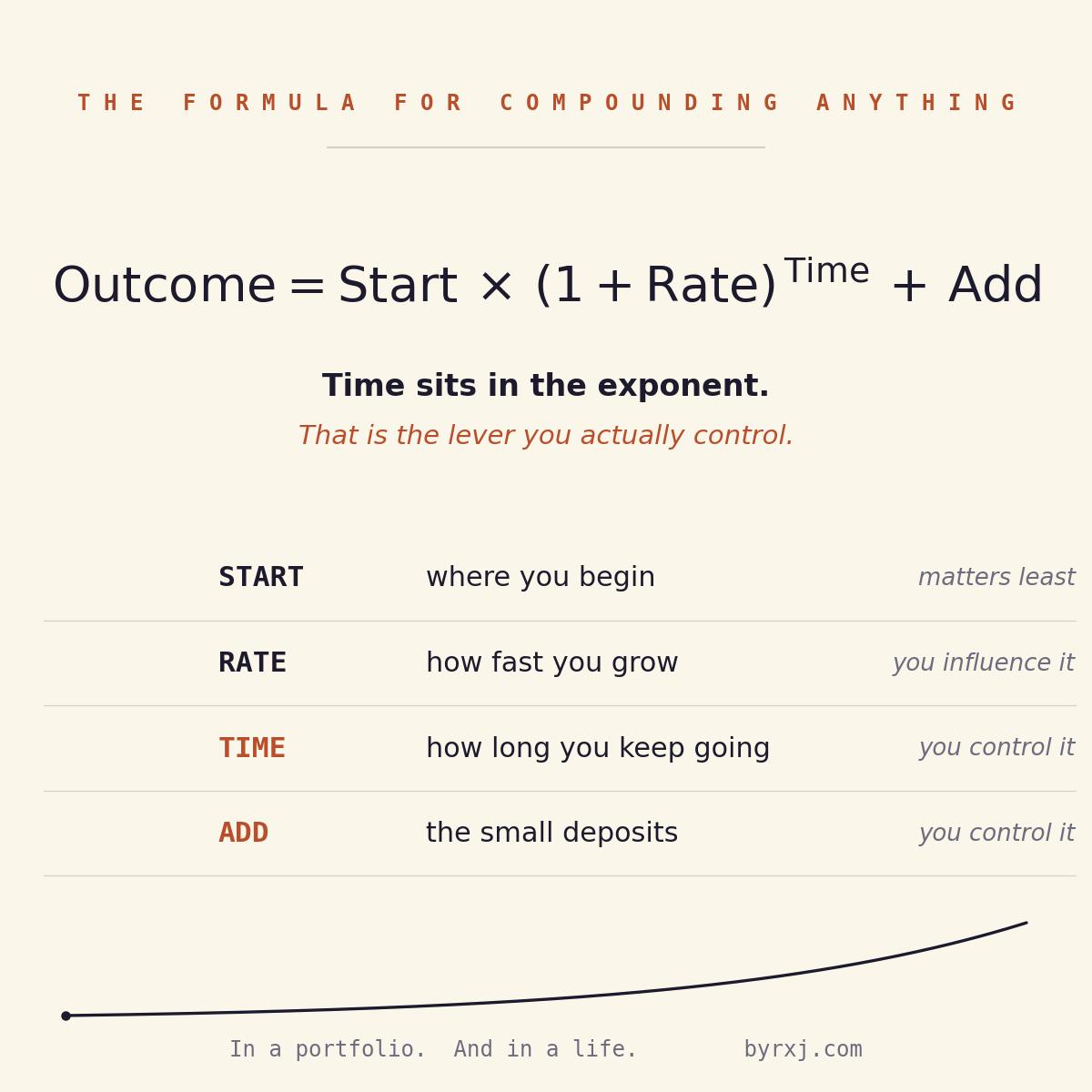
I spent this week modeling how money compounds. Halfway through, I realized I was staring at the formula for a life.
Where you end up = (where you start) × (1 + your rate of growth)(time you keep going) + (what more you put in)
Four inputs. We spend our whole lives obsessing over the first one. The school we got into. The talent we were handed. The head start we did or did not have.
It is the input that matters least.
Your rate of growth sits in the base of that equation. Time sits in the exponent. And given enough road, an exponent always wins. The person who gets 1% better each month and simply refuses to stop will walk straight past the prodigy who sprinted for two years and quit.
“The most expensive thing you can do is quit at the flat part of the curve, right before it bends.”
Three of those inputs deserve your attention. One you barely control.
Your rate. How much better you get each year. Hard problems. Honest feedback. The reps you would rather skip. You influence it. You do not own it.
Your time. How long you stay in the game without breaking the chain. This one is almost entirely yours. And the most expensive thing you can do is quit at the flat part of the curve, right before it bends.
Your deposits. The small, deliberate adds. The relationship you tend when nothing is wrong. The skill you practice on a quiet Tuesday. The rep nobody clapped for. Each one compounds for every year that follows.
Here is the part that is both cruel and kind.
Compounding is invisible until it is not. For years it looks like nothing is happening. Then the curve bends, and from the outside it looks like luck.
It was never luck. It was the exponent doing its quiet work, while everyone else was busy checking their starting point.
Your starting point is one line. The exponent is the whole story.
So stop optimizing where you began. Protect the years. Make the small deposits. And let an ordinary rate of growth do its patient, exponential thing.
That is the whole game. In a portfolio. And in a life.
The long version, with the worked scenarios that prove it on money first: The Compounding Equation Has Three Variables. You Control Two.
Email this as a LinkedIn pack
Get a feed-ready LinkedIn post (under the 3,000-character cap), a long-form LinkedIn article version, the hero image, and an editable document version of the full essay, delivered to your inbox. Ready to post.