We Cannot Afford Cognitive Atrophy
Surrender is the moment. Atrophy is the slope. Staying able to be right when AI is wrong.
By Rahul Jindal · 9 min read · Published May 22, 2026
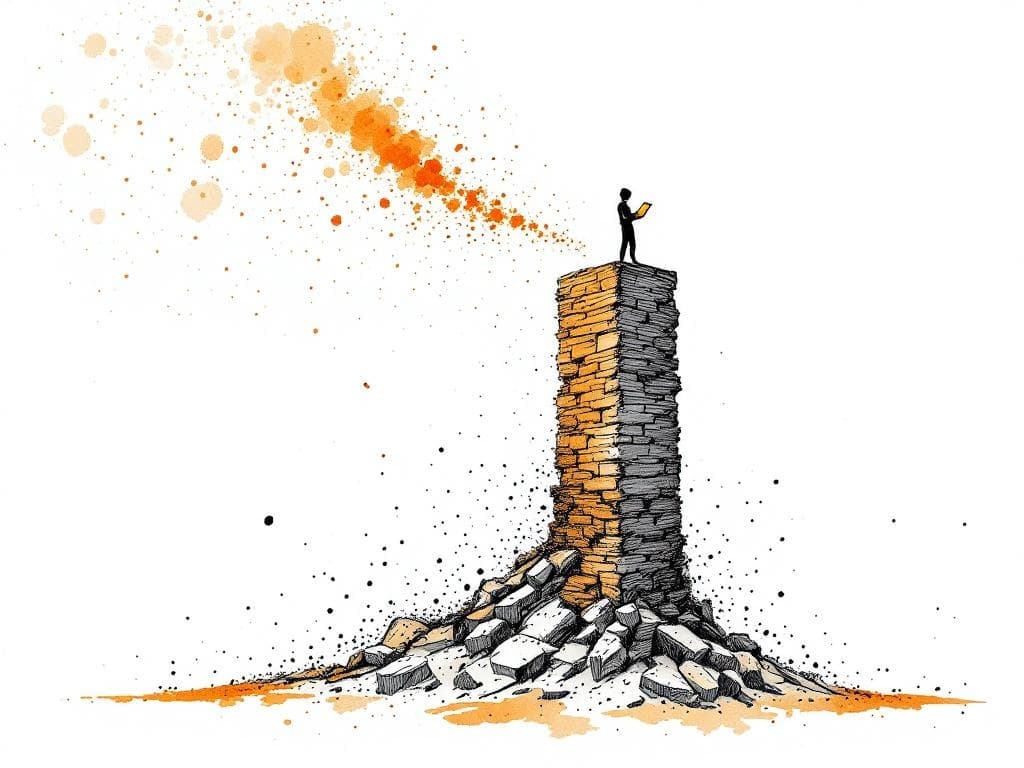
The honest version of the AI debate has been about output. How good the models are, how fast they ship, which jobs they replace, which they augment. It has not been about us. About what happens to our own judgment when AI sits in the loop on every question.
That judgment is the thing actually at stake. The visible failure is cognitive surrender: accepting AI output because it sounds correct. The invisible failure is cognitive atrophy: losing the ability to check it at all.
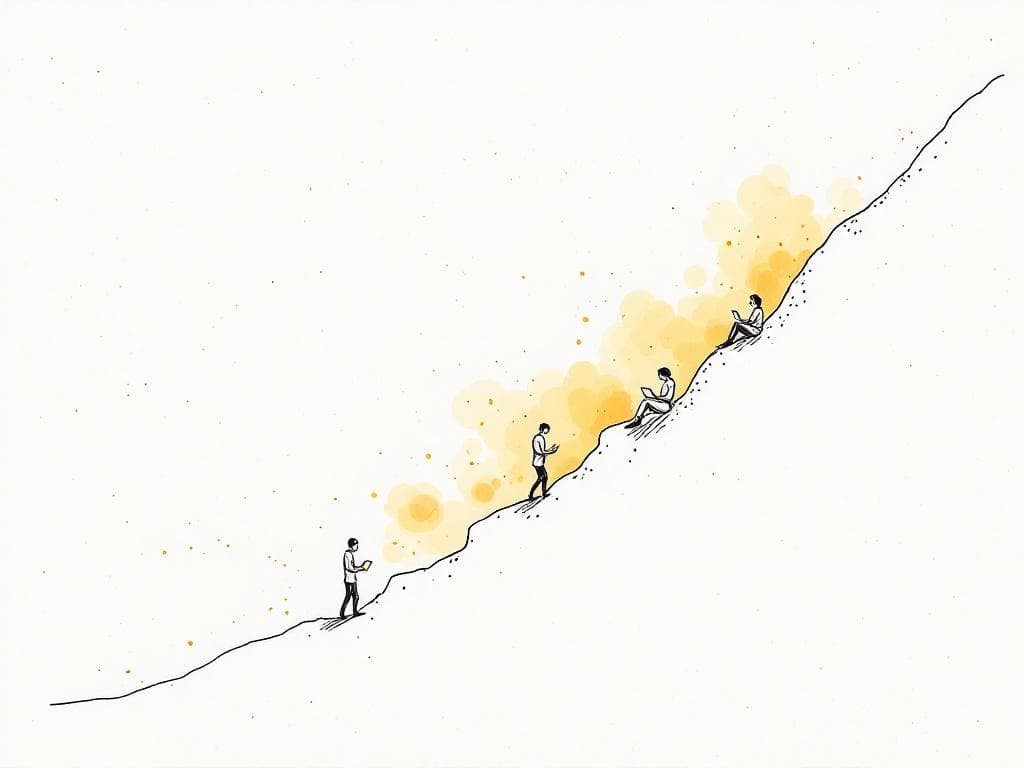
Surrender is a moment. Atrophy is a slope. This piece is about the slope.
Why this risk is new
Every thinking tool has cost us something. Writing weakened memory; Socrates said so and he was right. Calculators weakened our arithmetic. GPS weakened our sense of direction. Each generation accepted the trade because the tool was reliable. We do not need to read the stars anymore, because the map app works.
AI is different in two ways.
First, what it takes over is judgment itself. Older tools handled small, defined jobs: remember this, add that, find the road. AI takes over the big one: deciding what is true, what matters, what to do. When that muscle weakens, you lose the very thing you would use to check the tool.
Second, AI is wrong in a way that looks exactly like being right. A wrong map app sends you down the wrong street, and you notice. Wrong AI output reads as smoothly and confidently as correct AI output, and you do not. We have never lived with a tool that lies this fluently. A newspaper could be sued for getting it wrong. A broadcaster could be fined. AI faces nothing like that yet, and nothing in how it sounds tells you which answer to trust.
Put those together and you have the threat. A tool that is wrong sometimes, in the areas that matter most, in a voice that always sounds right, handed to everyone at once, with no habit of checking it.
“AI is wrong in a way that looks exactly like being right. We have never lived with a tool that lies this fluently.”
The “I already know” defense does not hold up over time
The usual reassurance is that experts will not be fooled. The surgeon catches the wrong diagnosis. The lawyer catches the made-up citation. The senior engineer catches the bad code. Their expertise protects them.
True today. Not true for long.
Expertise is built by working hard problems yourself and finding out whether you got them right. If AI solves every problem a beginner would have struggled through, where does the next expert come from? Today's senior surgeons grew sharp on a steady diet of cases they had to reason through alone. The next group will train on cases AI reasoned through first. The practice that builds the instinct to catch AI's mistakes is exactly the practice AI now does for you.
And it fades even in the people who already have it. Skills you stop using go quiet. A surgeon who lets AI plan every operation gets worse at planning operations. A writer who lets AI outline every piece gets worse at outlining. You do not feel it slipping. You find out the day AI is wrong and the part of you that should have caught it is not there anymore.
Aviation learned this the hard way. They call it the automation paradox. Pilots who flew on autopilot for years lost the feel for flying by hand when it counted. Air France 447 fell into the Atlantic for several reasons, and one of them was that the crew had not hand-flown at altitude in so long that, when the autopilot quit, they could not recover. The industry's answer was not to ask pilots to try harder. It was to require hours of hand-flying, rebuild the simulator training, and drill the exact case of the automation lying to them.
That is the pattern worth copying.
What the fields that solved this actually did
A handful of professions have held off this kind of decay for decades. None of them did it by hoping people would stay skeptical. All of them built the skepticism into the job.
Auditing. Professional skepticism is a written rule, not a mood. Auditors have to record what they questioned, not just what they concluded. The doubt goes on paper where someone can check it. You cannot quietly skip it, because the form has a line for it.
Intelligence analysis.Analysts run set techniques with names: list the competing explanations, write down your hidden assumptions, assign someone to argue the other side. Nobody is told to stay sharp. They are told to run the method. The work of doubting lives in the method, not in the person's willpower.
Aviation. Required hand-flying hours, hard simulator scenarios, drills built around the automation failing. The system keeps the skill alive that would otherwise fade.
Radiology. Read the scan, commit to your read, then see what was actually there, and adjust. You stay accurate because you find out, fast and often, whether you were right.
Surgery. Robots are everywhere in the operating room. Trainees still learn open surgery first. You earn the assisted version by mastering the unassisted one.
The common thread:
- Skepticism built into the process, not left to mood.
- A fast way to find out whether you were right.
- Doubt written down, not just felt.
- Someone whose job is to attack the work.
- A core skill you are never allowed to fully hand off.
None of it rests on people being heroes. The system carries the weight. That is the real lesson. The fields that survived automation did not raise a generation of unusually disciplined people. They built the discipline into the rules, so ordinary people produced careful work anyway.
What you can do yourself
Personal habits will not save everyone. They will save the person who keeps them. That is still worth it.
- Keep one thing AI-free. Pick one demanding thing you make without AI. Once a week, minimum. Write the hard memo by hand. Think the strategy through from scratch. It is training, the same way pilots still hand-fly and surgeons still cut by hand.
- Use a checklist, not willpower. Do not try to be skeptical. Run three questions on anything you will act on. Where is this actually from? What would have to be true for it to be wrong? What is one example that would prove it wrong? A checklist works on bad days. Willpower does not.
- Write down your doubts. Keep a short log of what you questioned and what you let through. Read it back once a month. You will catch your own judgment slipping before anyone else does.
- Guess before you check. Before you ask AI, write down what you think the answer is. Then compare. Over time you learn where you are sharp and where you are soft, which is the only honest way to keep your judgment calibrated. It is the same trick that keeps radiologists accurate.
- Stay genuinely deep in one thing. A generalist riding AI everywhere is easy to fool. The person who cannot be fooled has at least one area where a wrong answer just feels wrong. That one area becomes the ground you stand on while you watch everything else.
What these share: none of them is a feeling. All of them leave a trail.
What actually scales
Personal discipline does not scale. Most people will not keep it up. The real question is whether our institutions hold the line for them.
Make people learn the hard way first. Junior lawyers write briefs without AI for their first couple of years. Medical students diagnose without AI for part of their training. New analysts write their own analysis until they have earned the tools. We already certify these professions; we just have to put the unaided requirement in the certificate. Aviation did it fifty years ago. Everyone else is late.
Pay for checking, on purpose.Newsrooms need real fact-checkers, not the ones cut first in a bad quarter. Companies need a review step that catches bad AI output before it ships into a real decision. Schools need oral exams as the norm, not the exception. The institutions that make it through the next decade are the ones that fund “we will verify” as a real line item. The ones that treat checking as overhead will lose first to faster rivals, then to mistakes they cannot trace back.
Label where claims come from. A claim pulled from a search snippet is not the same as one from the original source. Show the difference. Nutrition labels changed how people eat without making everyone study food science. The same kind of label can change how people read what AI tells them.
Set AI to check AI. The thing doing the doubting does not have to be a person. One model red-teaming another scales in a way that human vigilance never will.
Test thinking, not output.Move from the take-home essay to the live conversation, from the multiple-choice test to defending your answer out loud. Oxford's tutorial system always worked this way and now looks ahead of its time. The schools that survive will be the ones that test what AI cannot fake: reasoning on the spot.
The part nobody wants to pay for
Making things with AI is cheap. Checking them is expensive. Right now we reward the making and not the checking. Until that flips, the decay is the default, and the careful person just gets out-run by the faster, sloppier one.
We inspect food because society decided to pay for it. We audit company books because society decided to pay for it. We test drugs before they ship because society decided to pay for it. Checking information has no such system behind it. We simply have not built one.
So build it. Fact-checking you can buy as a service. Verification that runs like a utility. A “verified” stamp that customers and regulators care about enough to pay for. Insurance that costs more when the AI output behind a decision was never checked. The same machinery we built for food, money, and medicine, pointed at information.
Without it, even careful people lose ground every year, because everything around them keeps making the lazy option cheaper. Decay wins on price.
“The skill to protect is not 'resist AI.' It is 'stay able to be right when AI is wrong.' The first is an attitude. The second is an ability.”
The one claim that holds it together
Ability comes from practice and is kept alive by the systems around you. The fields that beat this kind of decay did not produce heroes. They produced checklists, simulators, audit rules, oral exams, and someone whose job was to argue back. The system did the hard part.
The societies that come through the AI era in one piece will be the ones that build that system for everyone, not the ones that hope willpower will hold. The decay is invisible. The things that stop it have to be built on purpose, out in the open.
Surrender is the moment. Atrophy is the slope. The work is to build the rails.
Email this as a LinkedIn pack
Get a feed-ready LinkedIn post (under the 3,000-character cap), a long-form LinkedIn article version, the hero image, and an editable document version of the full essay, delivered to your inbox. Ready to post.